


Our history
Harkness wanted his donation to support the urgent and future needs of the UK. This wide brief has led us to contribute to the first open-air nurseries, the first preservation trust for historic churches and many other pioneering projects.
Highlights from our history

With an endowment of £2 million, American philanthropist, Edward Harkness, founded the Pilgrim Trust. This large gift captured the UK’s imagination and the King and Queen received the Harknesses at Buckingham Palace. The Trust’s first Trustees were Stanley Baldwin, Sir James Irvine, Sir Josiah Stamp, Hugh Macmillan and John Buchan, the author who wrote the trust deed.

With shifting foundations, Durham Castle was in urgent need of work to save the building from sliding into the River Wear. Our first grant of £25,000 went towards saving this historic castle.

We supported Lincoln Cathedral with a grant of £20,000 to help finish repairs on its central tower. This was the first cathedral we supported and the acknowledgment of which you can still see inside today!
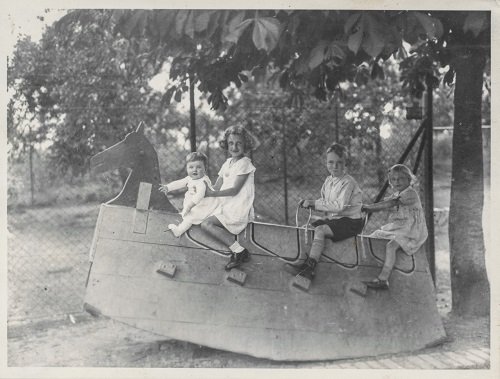
We supported a Save the Children Fund for emergency open-air nurseries in ten ‘distressed and crowded areas’. The anticipation was after a few years these nurseries would be taken over by the Local Authorities.

Much of our early work focused on the high levels of unemployment in the UK and giving individuals work and volunteering opportunities. This culminated in the publication of “Men Without Work”, a significant piece of research that is still read today. It explored who was unemployed and why across six towns.
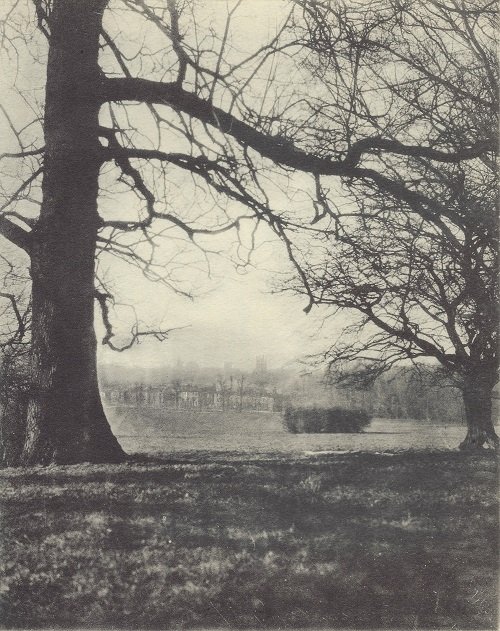
We supported the Oxford Preservation Trust to purchase the Headington Hills – over 500 acres – to save them from redevelopment as a green space for public enjoyment. From our earliest years, we funded organisations like this, to help them buy the rights of commons and open spaces to preserve the countryside.

As the Second World War began, one of our Trustees, Lord Macmillan saw how low morale was. He helped created the Committee for the Encouragement of Music and the Arts – CEMA – which was successful in bringing arts and music projects to local communities across the UK. By 1942, the UK government took over running it. CEMA later developed into the Arts Council of Great Britain.

The Pilgrim Trust’s offices in the Adelphi, London were bombed and in 1941, one of the Trustees, Lord Stamp, was killed in an air raid. The Trustees decamped to Wales for the rest of the war, returning to London in 1945.
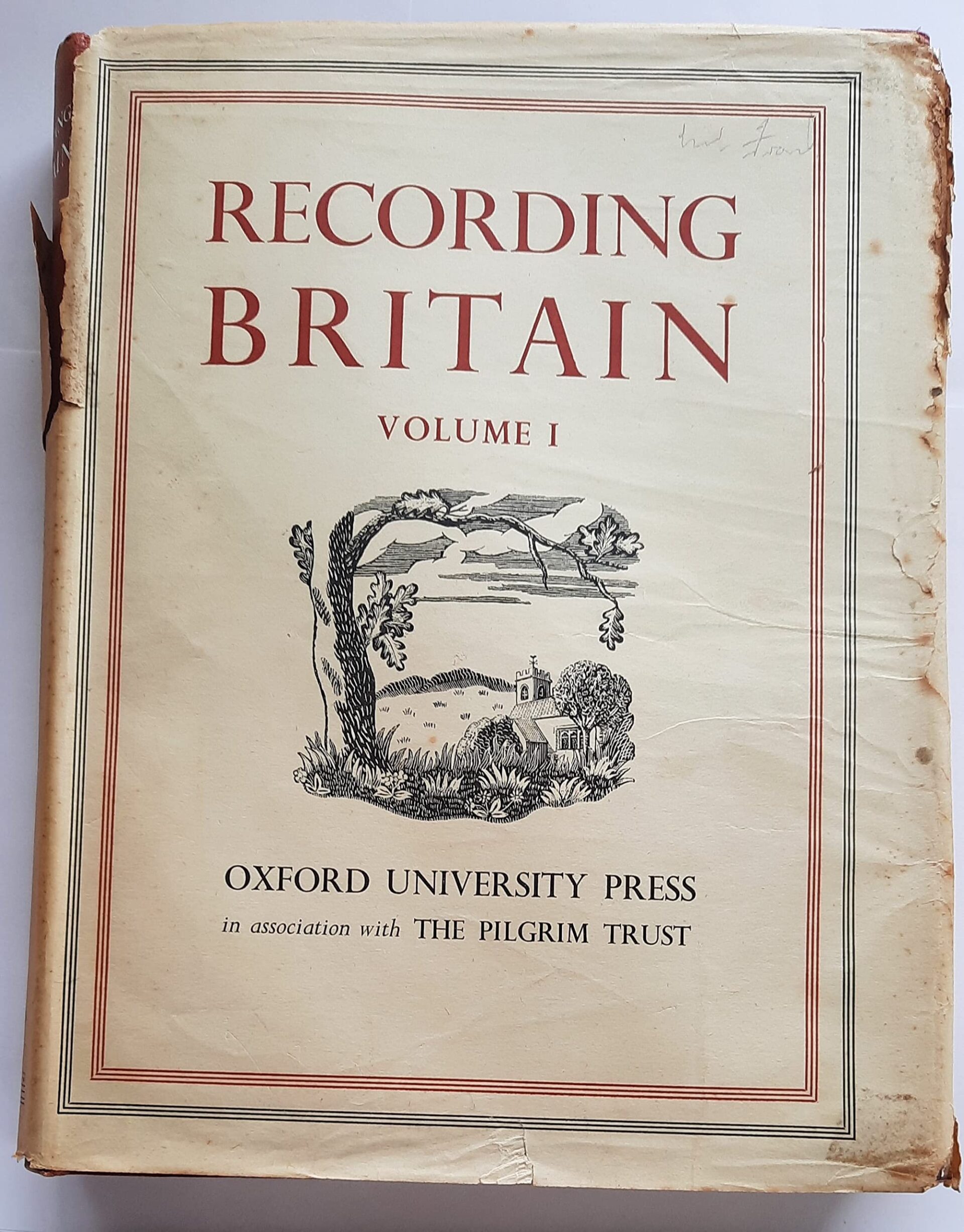
At the outbreak of the Second World War an ambitious scheme was set up to employ artists on the home front. This was the brainchild of Sir Kenneth Clark working with the Pilgrim Trust. The result was a collection of more than 1,500 watercolours and drawings that make up a fascinating record of British lives and landscapes at a time of imminent change. They were widely exhibited during the war years, and in 1949 the Pilgrim Trust gave them to the V&A Museum where they may be still viewed on request.

Between 1944 and 1950, Professor E W Tristram researched and subsequently published the first complete inventory of English medieval in situ wall paintings on behalf of the Pilgrim Trust and the Courtauld Institute of Art.

By the middle of the 20th century, many parish churches in the UK were in a poor state of repair. The Pilgrim Trust supported the formation of the Historic Churches Preservation Trust with its largest grant to date of £100,000. Now the Historic Churches Preservation Trust is known as the National Churches Trust and is one of our strategic partners.

The Pilgrim Edition of “The Letters of Charles Dickens” is regarded as an outstanding scholarly achievement.t. The twelve volumes were published between 1965 and 2002. The first volume contained 1,059 letters that Dickens had written between 1820 and 1839 – he was only 27 at that point!

Established by Dr Cicely Saunders, the pioneer of the modern hospice, St Christopher’s was the UK’s first hospice and opened in 1967. We gave £10,000 towards the cost of the building equipment.

The Trust helped equip the Scottish Association for Care and Re-settlement of Offenders’ information centre. During the 1970s, we gave many small grants to organisations and causes helping vulnerable people across the UK.

We helped the Meta House Trust furnish and equip a temporary rehabilitation centre for mothers with substance misuse problems and their babies. Grants like this reflected our growing focus on supporting those with addiction issues and issues affecting women.

Throughout the 1980s and 1990s, we gave grants to individuals and families affected by the criminal justice system. For example, £7,000 went to The Terrence Higgins Trust to produce pamphlets aimed at preventing the spread of HIV among drug abusers and prisoners. We granted £15,000 to the Mental Health Foundation to support setting up a bail hostel in Birmingham for defendants suffering from mental illness.

The Duke Humfrey’s Library within Bodleian houses early printed books and manuscripts and the structure dates back to the 15th century. Urgent repair works were needed when death watch beetles were found in the roof – these woodboring beetles can infest and destroy the structural timbers of old buildings. Our grant of £100,000 helped remove 160 painted panels to treat and conserve them.

By the late 1990s, one of our focuses was on supporting women within the criminal justice system. The 1st Night in Custody Project contacted women coming into HMP Holloway for the first time, helping reduce anxiety and provide them with information about available services. A pilot, and risky project at the time, it was later established in other prisons and attracted statutory funding.

We partnered with the Esmée Fairbairn Foundation and The National Archives to support the cataloguing of important archives to which people had little to no access. In the pilot year, 12 grants were awarded and it was deemed a success. We continue this work with The National Archives today in our Archives Revealed programme.

The coalition was formed by many funders and grant makers to advocate for the recommendations made by Baroness Corston in her 2006 report on women in the criminal justice system. We joined in 2008, reflecting our focus on supporting women in prison, especially considering the effects of the criminal justice system on mothers and children.

Built in 1813, Sandycombe Lodge in Twickenham is a pretty Regency villa designed by landscape painter, J.M.W. Turner, as a country residence for himself and his elderly father. Our grant for emergency repairs helped prevent further deterioration until a major restoration was completed in 2017.

We funded the 2021 edition of the Heritage Craft Association’s Red List of Endangered Crafts. The red list began in 2017 and is the first to rank traditional, heritage crafts by the likelihood they will survive to the next generation.

After a review of our social change grants programme, we decided on a new focus. Young Women and Mental Health aims to improve mental health provision for young women and girls aged 16-25. It will run from 2021-2026.
“He hopes that such a gift wisely applied may assist not only in tiding over the present time of difficulty but in promoting her [UK's] future well-being.”